

Behaviour
Our social behaviour is the basis for solving problems
Patrick van Veen and his Apemanagement® colleagues use our primal social behaviour as a starting point for tackling problems and challenges. The apes we study serve as an important mirror in this regard, as do the results of more than 100 years of research on great apes conducted by psychologists, sociologists, anthropologists and biologists such as Patrick.
Organisational behaviour and colleagues
The workplace is often described as a monkey hill, a metaphor suggesting that the struggle for power takes centre stage. But a group of colleagues is more than a collection of individuals competing for authority. Our primal behaviour helps us cooperate effectively and shapes how we respond to change. Insights from research on apes help us better understand complex workplace dynamics and provide practical tools for influencing behaviour constructively. Apes such as chimpanzees and gorillas are more than a mirror of our behaviour; they are a valuable study model for understanding workplace dynamics. A number of example themes are:
Leadership
Being the boss does not automatically mean holding power. Even among gorillas, where males are physically stronger than females, leaders must account for their behaviour and competences, as influence ultimately lies with the females. Apes demonstrate a fundamentally democratic leadership model; incompetent leaders are pushed aside. But leadership also has many facets. Contrary to popular belief, it is not always the strongest who becomes the boss. Social skills are often the key reason why a male chimpanzee becomes the group’s leader. Lessons about leadership focus on the core question: what is the function of leadership and how does it relate to the group?
Team building
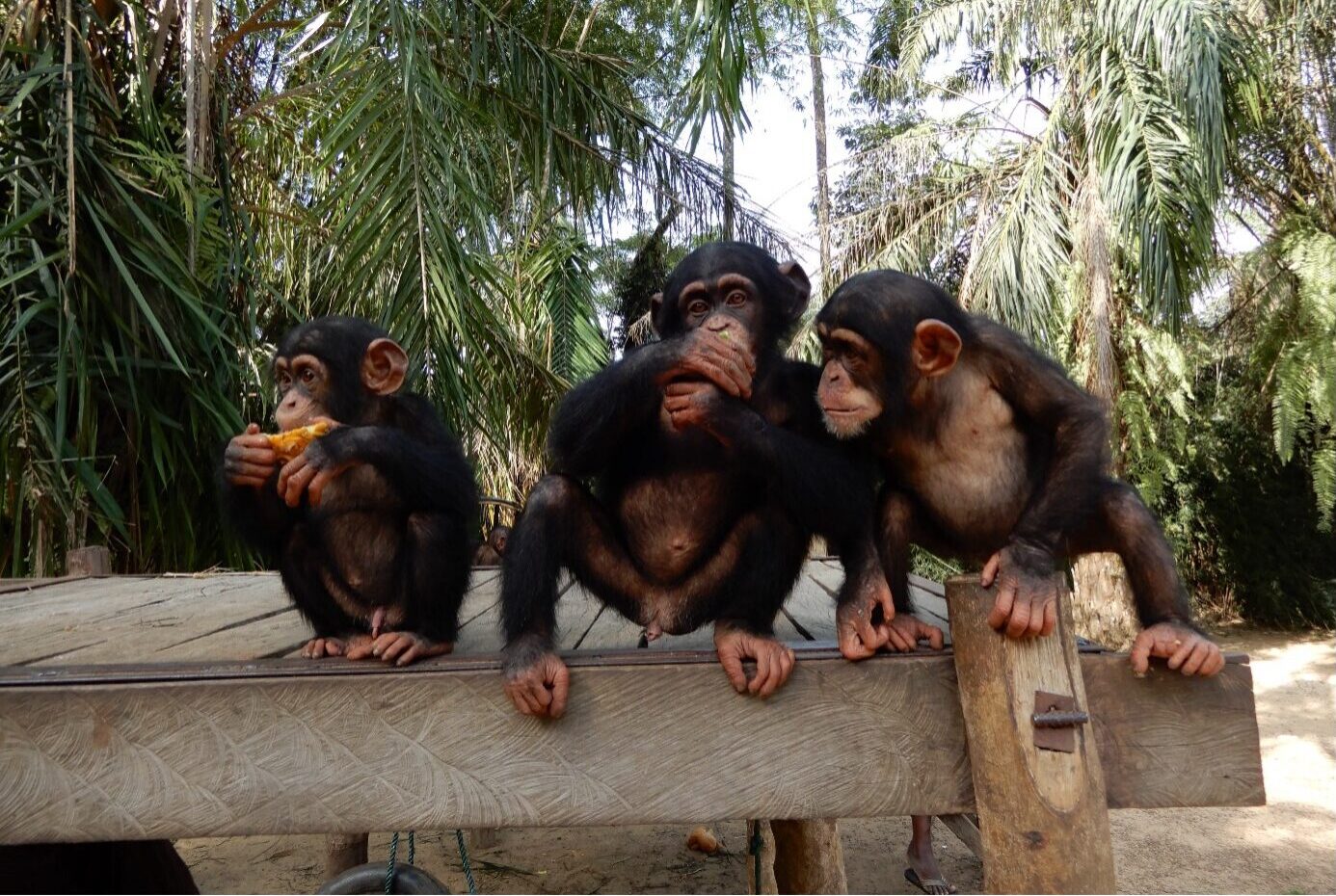
What transforms a group of individuals into a team? Anyone observing a group of chimpanzees will discover that an effective group has clear roles and shared responsibilities. There are also behavioural norms that young individuals learn early in life and that are essential for the group to function. The value of agreements, how to communicate and who addresses whom about behaviour that is inappropriate or disruptive? Violating rules of behaviour has consequences among chimpanzees, but how does this translate to human teams? Observations also highlight the importance of rituals, which can strengthen bonds (grooming), build trust and facilitate reconciliation after conflicts (reaching out gestures).
Cooperation
In 1921, Professor Köhler from Göttingen published research on cooperation among chimpanzees. In his experiment, chimpanzees could only access food through communication and cooperation. When Patrick and his colleagues repeated the experiment, they found that the fundamental prerequisite for effective cooperation is trust and social bonding. What can organisations learn from nature about the difference between simply working alongside one another and truly cooperating? But also, how does hybrid working create new challenges for cooperation? Are we willing to invest what cooperation requires? That investment, quite simply, is making time for grooming.
Change management
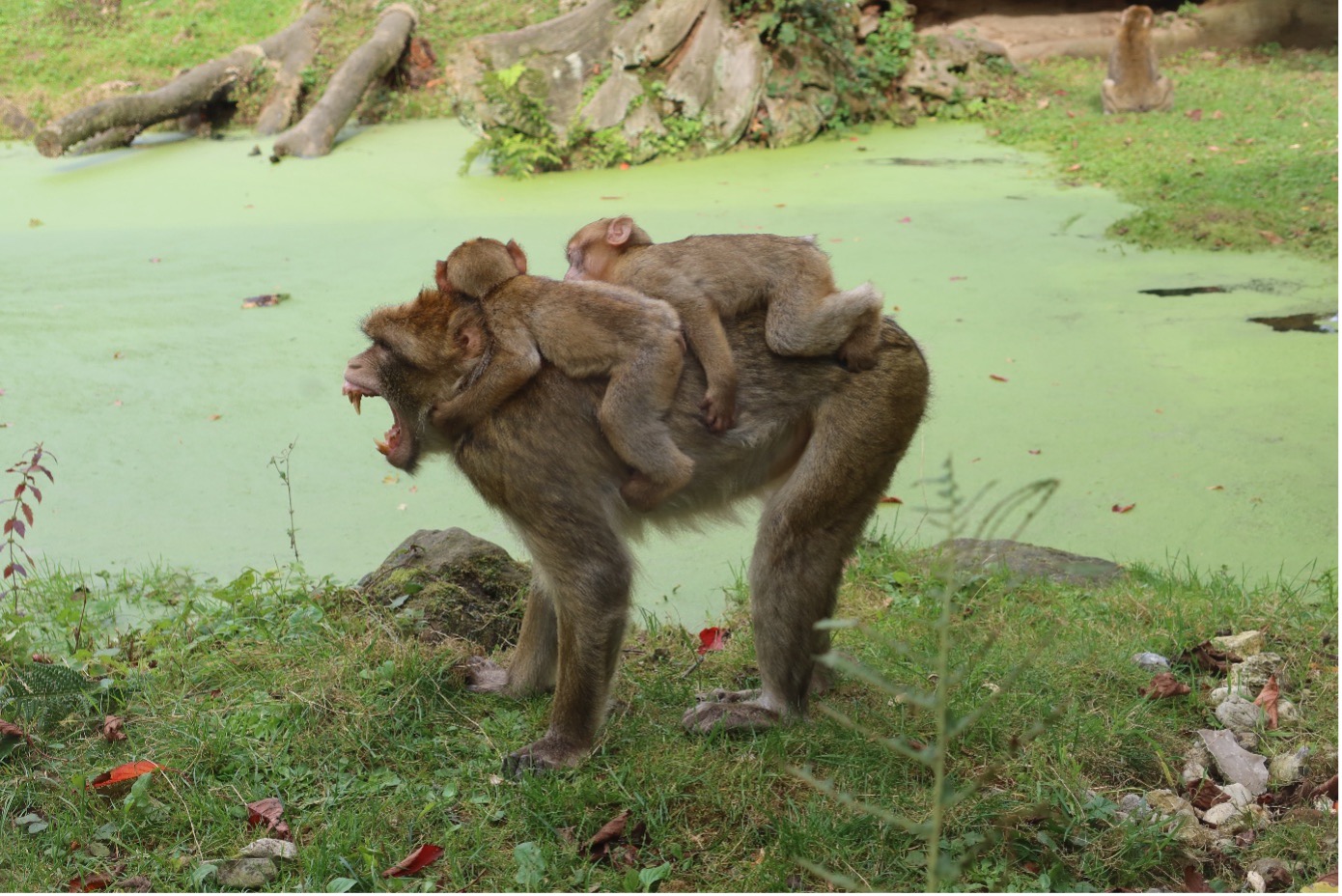
The world around us is changing, and organisations must anticipate these developments. Technology, AI, internationalisation, home office, politics and social media are changes we cannot ignore. But how do you bring people along? And are we, as human beings, truly willing to change? At the core lies the fact that we find it harder to let go of what we already have than to embrace new things. Research with orangutans shows that change also depends on social context. Our openness to change is influenced by the people around us. Perhaps we can learn from adolescent behaviour and from research into cultural development in Japanese macaques that change begins with curiosity about others.
“Those who don't want to change can never retire”.
Influencing behaviour
For a behavioural biologist, understanding the motivation and function of behaviour is at the heart of research. What drives us to do what we do? This naturally raises the question of how behaviour can be influenced effectively. How strongly do our instincts shape our actions? What role does environment or social pressure play? Are we herd animals who simply follow the group, or are we stubborn chimpanzees who make independent decisions? If you want to influence behaviour effectively, you first have to understand it, is a quote Patrick has used from the very beginning. Research not only helps us understand behaviour, it also shows how behaviour can be shaped and what does and does not work. Whether the issue is change, safe working practices, collaborating, taking responsibility or addressing one another, it all starts with influencing behaviour in the right way.
International cultural diversity
In an increasingly globalised world, companies are being acquired by foreign shareholders and operate across borders. Anyone who looks beyond their own borders will quickly discover the impact of cultural differences on behaviour within organisations: the impact of hierarchy, differences in rituals, ways of connecting, status symbols, ways of addressing people, approaches to conflicts, and attitudes toward individuals. There are also substantial differences in how we view working from home, the value of agreements, and the distinction between formal and informal power. Integrity and organisational politics do not carry the same meaning everywhere. Patrick worked for more than 10 years in an international organisation, where he collaborated with more than 30 different cultures. He was responsible for resolving tensions caused by cultural differences and for enabling people with different cultural and linguistic backgrounds to work together effectively. As a behavioural biologist, he observed and analysed, but also sought to understand the impact of these differences on organisational behaviour. The lessons learned are incorporated into his lectures and workshops.
" Humans are social beings, so you must influence and change not only the individual, but the entire environment."
" We often try to change behaviour by pulling the wrong levers."
Social safety and boundary-crossing behaviour
It appears that we are facing a decline in social safety in the workplace and an increase in disruptive and boundary-crossing behaviour, at least according to the growing number of reports in the media. Perhaps the expansion of the many social groups we belong to explains why we are less able to correct behaviour and address colleagues about their conduct. After all, we can simply walk away when we witness disruptive behaviour. Or have our boundaries shifted? Have we become less tolerant, labelling behaviour as inappropriate more quickly? What can we learn from primates and from biology when it comes to addressing disruptive and boundary-crossing behaviour?
We should approach social safety in the same way we approach physical safety. When working conditions change, we assess the physical risks and adjust safety measures accordingly; we should apply the same principle to social safety.
The key point is that we need to regularly evaluate our behavioural norms. In every social group, there are (often unwritten) rules that enable safe and constructive interaction. But when new individuals join a group or the environment changes, those rules must be reassessed. What we observe in primates is that they have clear behavioural rules. When those rules fail, rituals ensure that individuals reconnect, confront issues, reconcile and restore relationships. There is always an alpha female present who addresses disruptive individuals and bullies. Since no one can leave the group, everyone benefits from peace, stability and social security.
As humans, we tend to organise everything into structures: processes, codes of conduct, formal roles such as a confidential advisor and core values that we pin on the wall. But ultimately, everything must be translated into behaviour: what do those core values actually mean, and what are the consequences if individuals fail to live by them?
“We can still place a hand on someone’s shoulder, provided we have sufficient anatomical knowledge and know exactly where the shoulder ends.”
“managers are often appointed as the first point of contact for inappropriate behaviour, conveniently overlooking the fact that most reports concern the managers themselves.”
In love with your customer
As a consumer, don’t we all want to be seduced a little? To feel that everything is being pulled out of the hat for us, despite our complex requests, high demands, inconvenient timing or impossible questions. In the process of romantic seduction, we recognise various stages that ultimately lead to commitment. But at the outset, there are different roles with different interests. That is why mutual behaviour can sometimes cause confusion. The customer may feel entitled to demand anything, while the supplier, salesperson or service provider may forget to set clear boundaries. Nothing is strange in the seduction process. The same applies to buying and selling, we are driven by primal instincts. Why do we find one terrace attractive and another not? Why do we dislike yawning and complaining salespeople? What does our brain do when navigating an automated phone menu? Why do we feel such an aversion to pushy salespeople? And why do we always want to choose from multiple options? And when does the seduction process actually begin?
Those who understand human primal instincts and how they influence our choices can create genuine attraction with customers.
Bullying behaviour
“Do monkeys bully too?” This question from a group of teachers led to research that resulted in a booklet, signal cards to better recognise bullying in the classroom, and specialised training programmes.
Previous research has shown that bullying occurs just as frequently among primates as it does among humans. Perhaps we also know more about the motivation behind bullying in animals than in school classrooms. Research into animal behaviour is much older than research on bullying in education. Publications by Austrian ethologist Konrad Lorenz on “mobbing” among animals led to the first studies of bullying behaviour in school classrooms in the 1970s.
Primates and human children bully to explore, to learn, to assess what they can expect from others or how others will respond. Some forms of bullying are related to hierarchy; others communicate in a negative way what is considered good or bad. As with primates, different roles exist: followers, instigators and others. A key difference, however, between humans and monkeys is that among primates, behaviour is corrected more effectively, preventing escalation.
During many hours of observational research, both in classrooms and among the gorillas, in collaboration with students from the Faculty of Social Sciences and Biology at Radboud University Nijmegen, the central question was: how can we effectively recognise bullying? The result was the development of signal cards for education and training courses in awareness, observation and signalling (BOS Method) of bullying.
Primordial instincts of love
When searching for the ideal partner, we often drift far from our biological roots. From a biological perspective, the definition of the ideal partner may differ significantly from cultural definitions. You are more likely to identify a suitable partner by sniffing their hair or paying attention to their shoe size than by looking at their personality, job or hobbies. Patrick van Veen appeared for years as an expert on RTL 4 and Videoland in the TV programme Married at First Sight. However, the foundation of his book and his perspective on love lies in scientific biological research conducted worldwide. This led to the first singles days at Apenheul more than 10 years ago. The outcome was not only romantic connections, but also real-life babies who trace their origins back to these events, just as in MAFS. Patrick regularly presents the theatre lecture: In search of love, guiding audiences through the primal instincts of love and what we can learn from them.